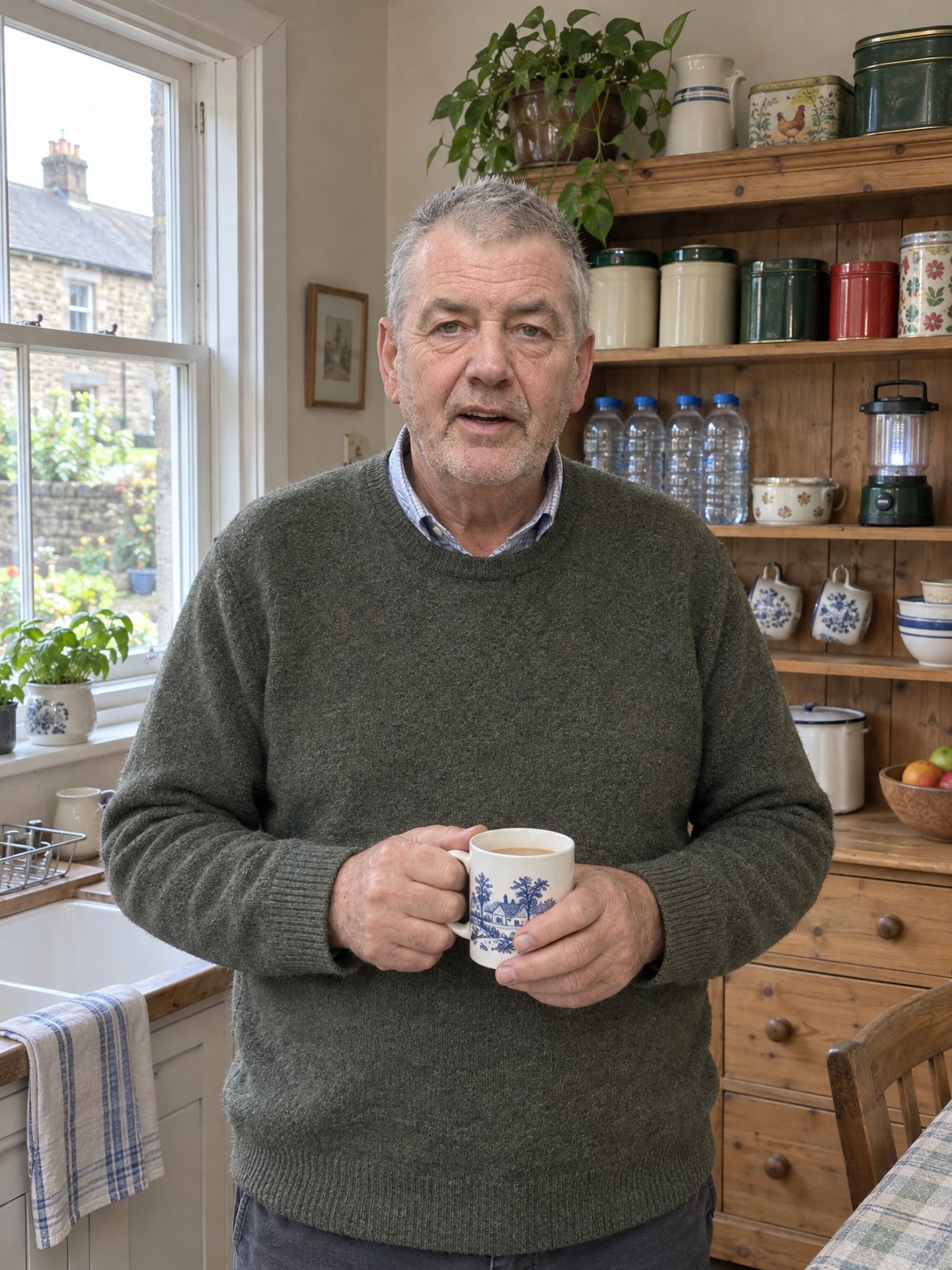
Two separate books in one set. Add the kitchen book if you like.
Most people take the set. If you'd like hot meals sorted for every day of a power cut as well, the third book comes in at a few pounds more.
🔒 Launch price · save £32 on the set while the clock runs
The set + The Power-Cut Kitchen
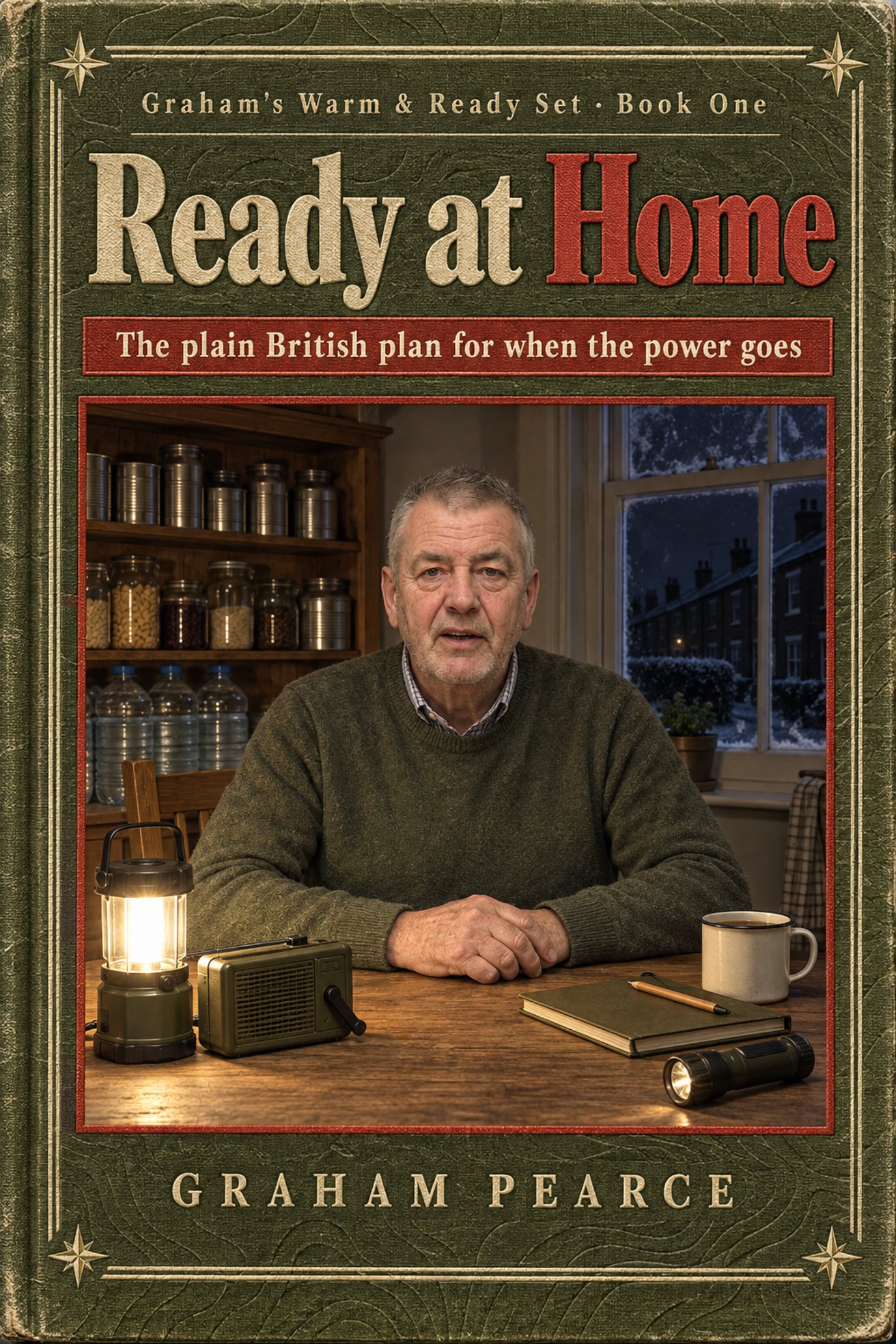
- Book 1 · Ready at Home: the British power-cut and emergency plan, 53 chapters
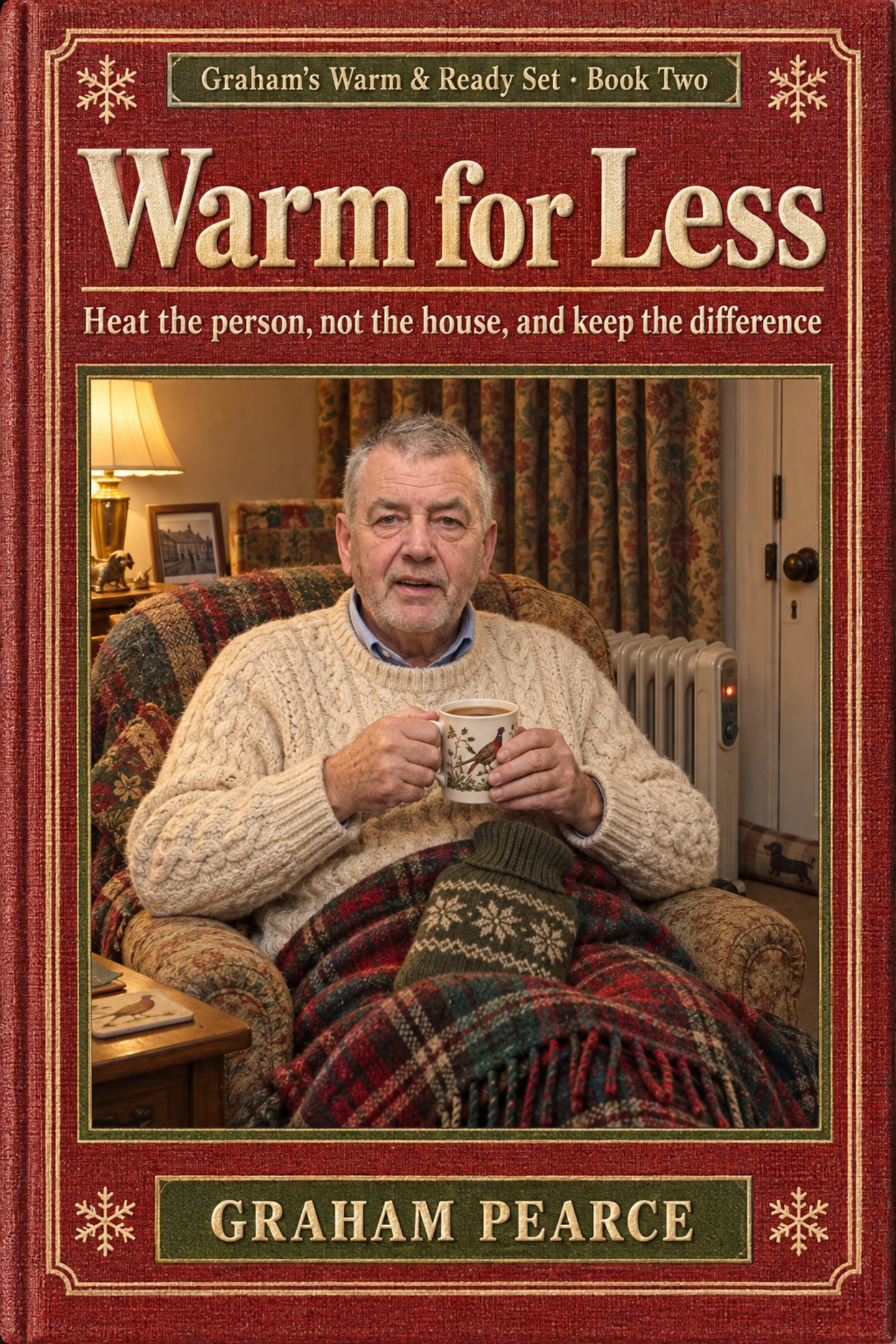
- Book 2 · Warm for Less: heat the person, not the house, 20 chapters
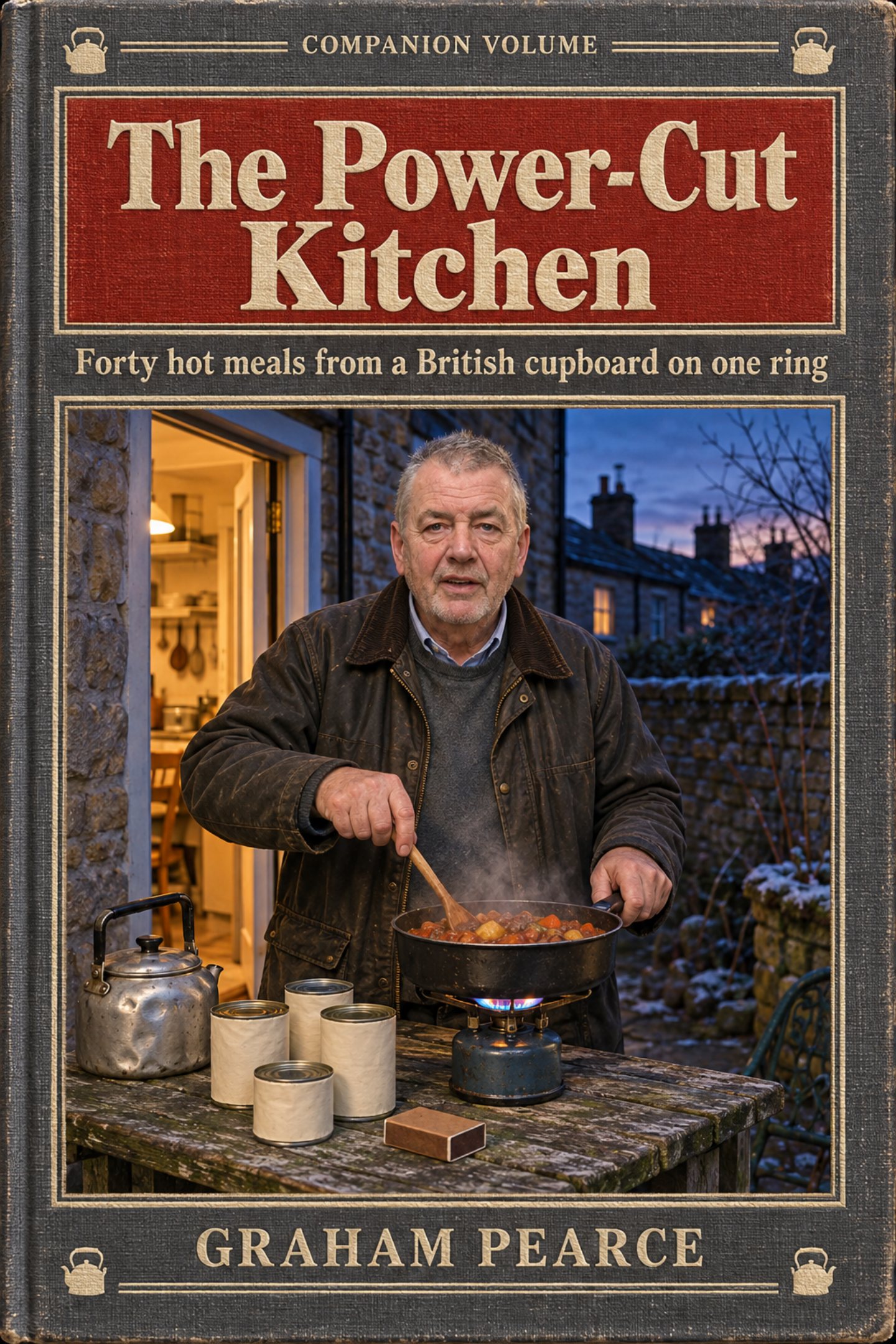
- Book 3 · The Power-Cut Kitchen: hot meals from ordinary tins on one camping ring, on half the gas
- All four bonus sheets, large print, Word versions, free updates
Graham's Warm & Ready Set
- Book 1 · Ready at Home, 53 chapters
- Book 2 · Warm for Less, 20 chapters
- The First-Hour Fridge Card, the £5-a-Week Store Cupboard, Water When the Taps Fail, Alone & Ready
- Large-print PDF and Word versions, free lifetime updates
Read them. Use them. If they don't save you more than they cost this winter, or leave you calmer and more ready, email me within 30 days for every penny back. Keep both books and the bonuses. No forms.
When the lights go, the first ten minutes decide the next three days.
I've watched it from the planning office. A storm brings a tree down across the lines on a country lane, and the calls start: the boiler's stopped, the phone's dead, the freezer's starting to drip, Mum's insulin is in the fridge. Most of those calls come from people with plenty in the cupboard. What they haven't got is a plan.
The government's Prepare advice is sensible as far as it goes: water, a torch, a radio, food for a few days. What it doesn't tell you is where to keep a gas canister in a flat, why your gas boiler stops when the electricity does, how long the freezer really holds, or how to flush the loo with no mains water. You've asked me every one of those under my videos. Each one is a chapter now, in more detail than any video has room for.
And the other half of winter isn't a power cut at all. It's the bill. Ofgem's cap from 1 October 2026 is £1,723 a year for a typical home on gas and electric, and on a pension you feel every pound of it.
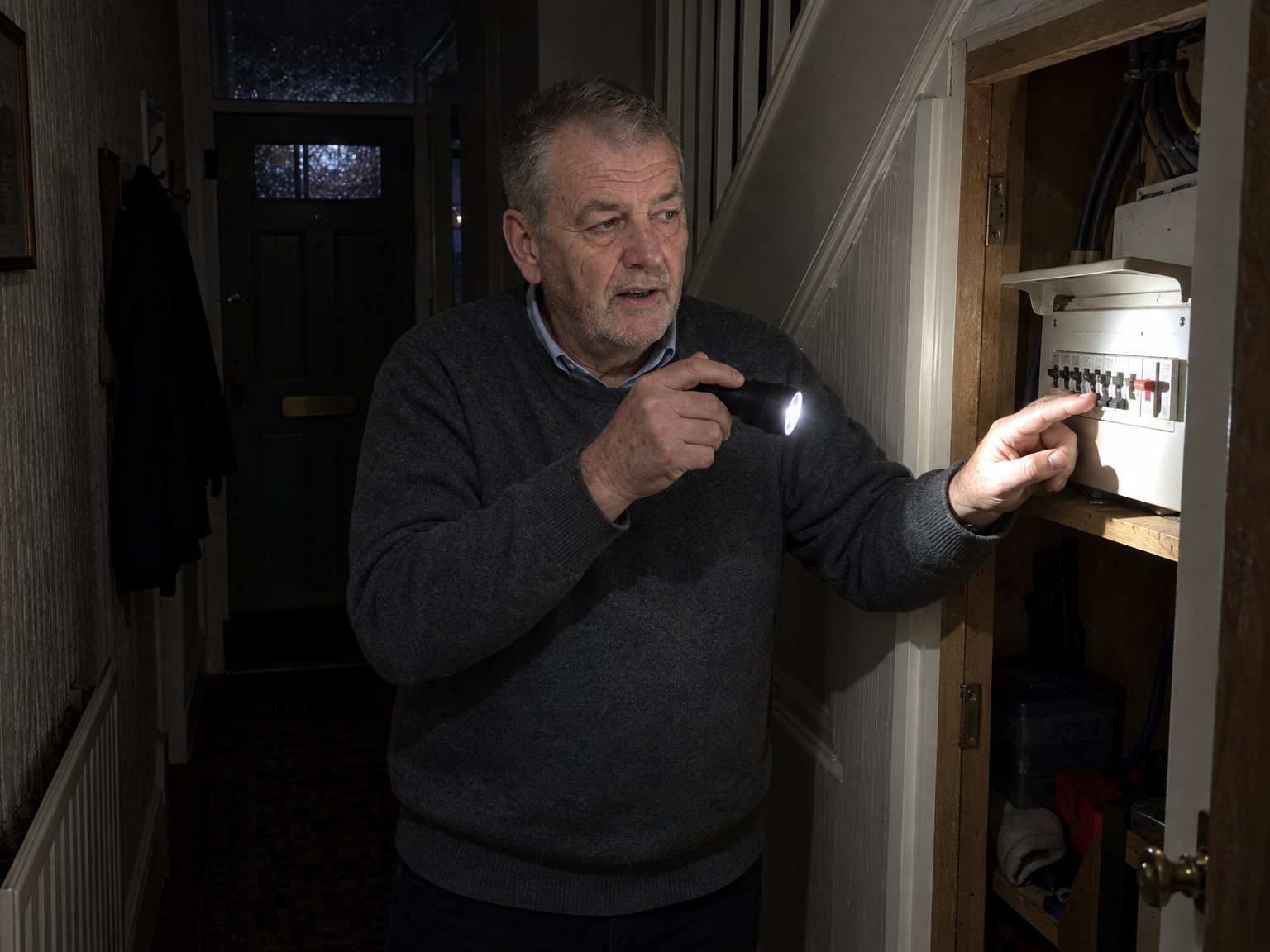
Tick what's already in your house.
Be honest with yourself. Count the ticks.
- A torch that lives in the same place, with batteries that work
- Drinking water for at least three days
- Water put by for flushing the loo
- A safe way to boil a kettle without the mains
- A battery carbon monoxide alarm that you've tested
- Cash in coins and small notes
- A week of your medicines, and a plan for anything kept in the fridge
- A battery or wind-up radio
- You know where the stopcock is, and it turns
- Your numbers written on paper, 105 among them
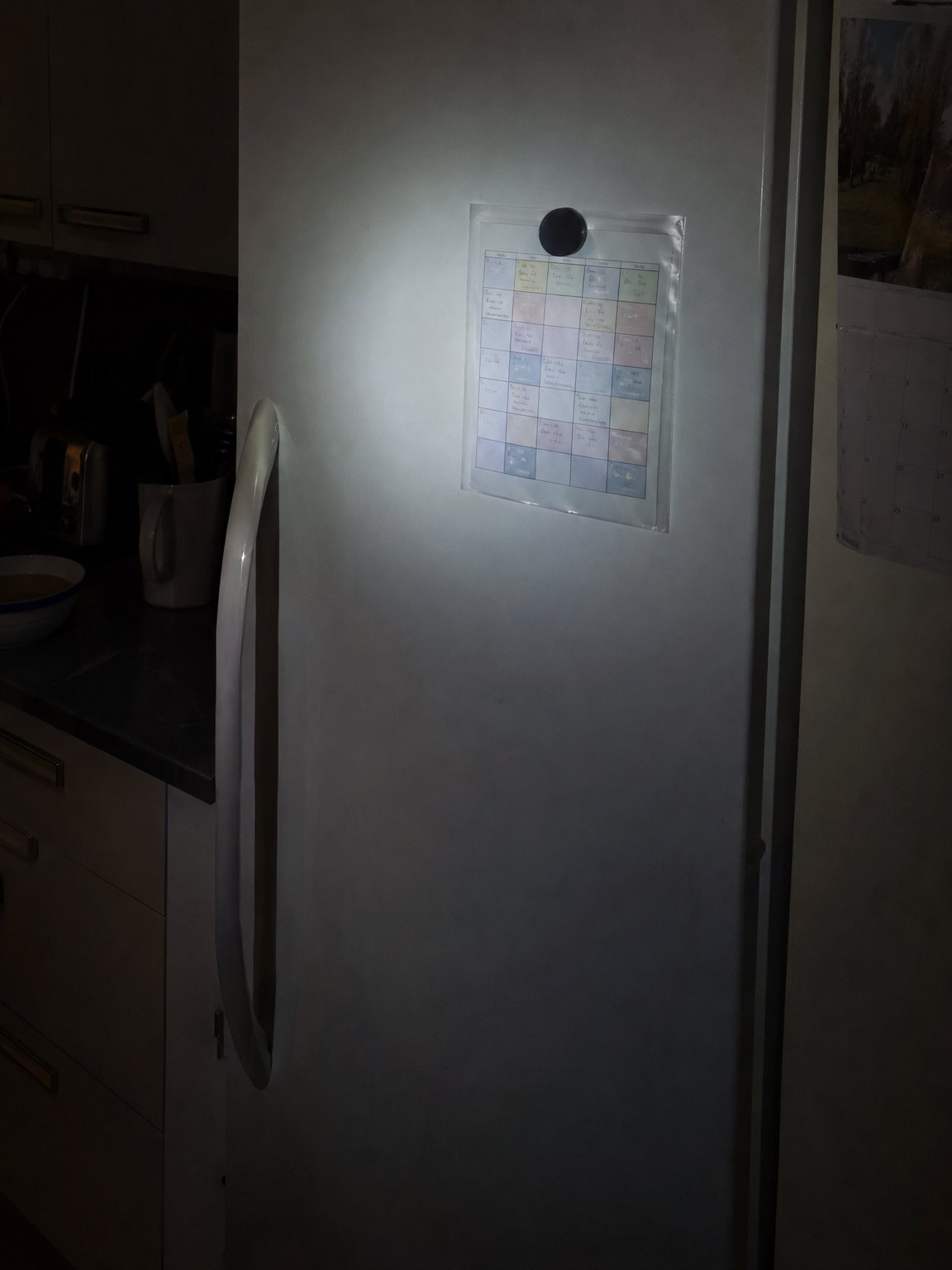
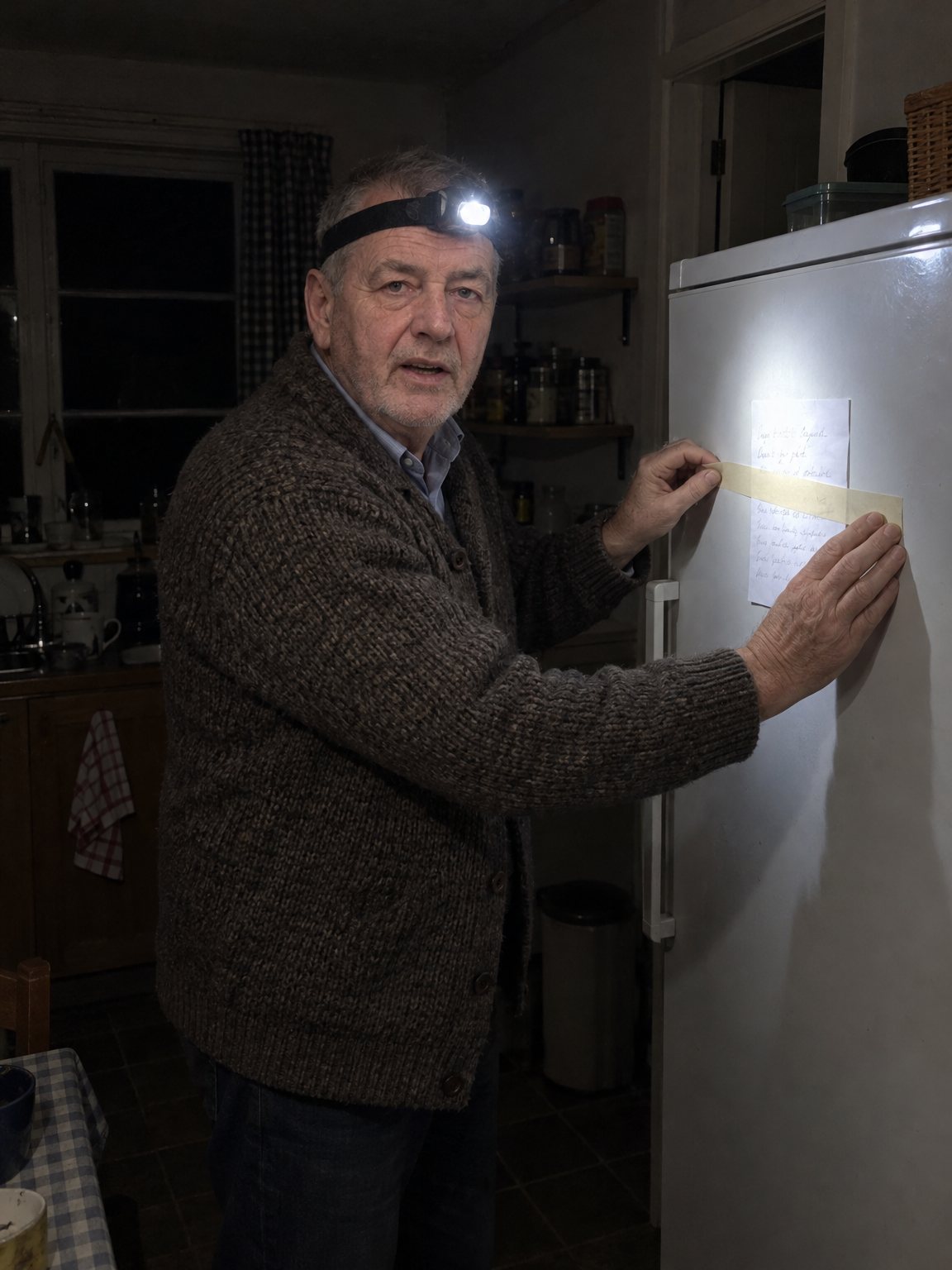
The card on the fridge door.
You fill it in once, with a pen. Then it does the thinking for you when you're stood in a dark kitchen with cold hands.
- Torch. Same drawer, always.
- Fuse box. A switch tripped? Then it's only you.
- Look out. Street lights and neighbours dark too?
- Ring 105. Free, from any phone, whoever your supplier is.
- Fridge and freezer shut. Don't open them to check.
- Switch off the cooker, heaters and iron. Leave one light on.
- Knock next door if someone lives alone.
Spare torch: __________ · Neighbour's number: __________
Seventy-two hours, hour by hour.
This is the part I'm proudest of. It puts the whole plan in the order it really happens, so nobody has to work it out by candlelight.
- Hour 0Torch, fuse box, 105, fridge shut
- Hour 1Switch off, one light on, the boiler, the phone, the radio
- EveningOne room shut tight, a hot drink from the camping ring, the CO alarm on
- NightThe bed as the warmest room in the house; checking on whoever lives alone
- Day 2Water, the loo, the fridge and freezer decision table
- Day 3Insulin and fridge medicines, cash, when to go to a rest centre
- Lights backThe restock checklist and the insurance photos
Book 1 · Ready at Home
The all-in-one British plan for a power cut, a storm or empty shelves. Written for a real British home: a terrace, a semi, a flat, a bungalow or a caravan.
The Plan Comes First
Five rules worth more than anything you can buy
- Five Rules I Learned Writing a County's Blackout Plan
- What the Government's 'Prepare' Advice Really Says, and the Bits It Leaves Out
- The Real Risks to a British Home, Ranked
- Your Whole Household Plan on One Sheet of Paper
- The £50 First Kit: What to Buy This Week, and in What Order
The First Hour
What to do when the lights go, minute by minute
- The First Ten Minutes: Torch, Fuse Box, 105, Fridge Shut
- Switch These Off, Leave One Light On
- Your Gas Boiler Needs Electricity Too: What Still Works in a Power Cut
- Phones, the New Digital Landline and Getting the News With No Wi-Fi
- The Fridge Card: Your First-Hour Plan on the Fridge Door
Water When the Taps Fail
Drinking, washing and the loo
- How Much Water You Really Need, and Where to Keep It in a Small Home
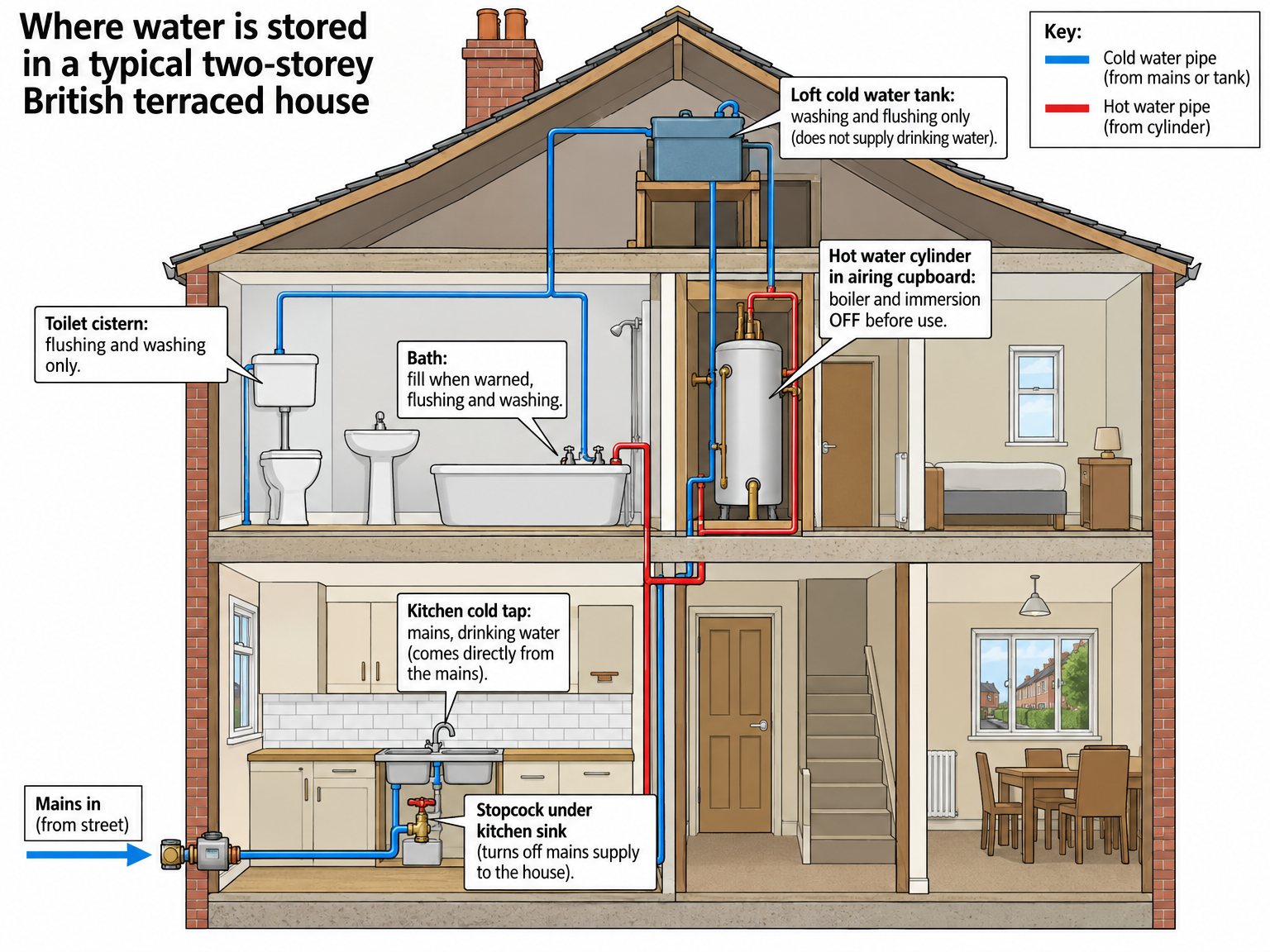
- The Water Already in Your House: Cylinder, Cistern and Bath
- Flushing the Loo With No Mains Water
- Making Doubtful Water Safe: Boiling, Tablets and Filters
- A Week of Washing, Teeth and Hygiene on a Few Litres a Day
Food and the Freezer
What to eat first, what to keep and what to bin
- What Happens Inside Your Freezer, Hour by Hour
- Eat It, Cook It or Bin It: The Fridge and Freezer Decision Table
- Seven Days of Meals From a British Cupboard, No Cooking Needed
- Rotating Your Tins So Nothing Goes Past Its Date
- Stocking Up Slowly on a Pension: Five Pounds a Week
- The Dog and the Cat: Food, Water and Warmth for Pets
A Hot Drink and Hot Food Without the Mains
Safe cooking in a house, a flat or a caravan
- Choosing a Camping Stove: Butane, Propane and What Never Comes Indoors
- Gas Canisters in a Flat: Where to Keep Them and How Many
- Ventilation and the Carbon Monoxide Alarm That Could Save Your Life
- The Flask and the Hay Box: Hot Food for Half the Gas
Light and Power for the Things That Matter
Torches, batteries, power banks and the truth about generators
- Torches, Lanterns and Head Torches: What to Buy and Where They Live
- Candles and Matches: If You Must, Here Is How to Do It Safely
- Batteries: Which Sizes, How Many and How Long They Keep
- Power Banks: Keeping Your Phone Alive for a Week
- Portable Power Stations in Plain Watt-Hours: What They Will Actually Run
- Why a Petrol Generator Is Rarely Right for a Terraced House
- Medical Equipment and the Priority Services Register
Warm Enough When the Heating Stops
Getting through a cold house in a power cut
- One Room, Shut Tight: Choosing Your Power-Cut Room
- Head, Hands, Feet: Dressing for a Cold House the Way We Did in 1962
- Your Bed as the Warmest Room in the House
- Heaters Without Mains Power: What Is Safe Indoors and What Is Not
- Frozen Pipes: Find the Stopcock Now, Before They Burst
Medicines, Insulin and Staying Well
Health first when services are stretched
- A Medicine Buffer the Legal Way: Repeat Prescriptions, Not Hoarding
- Keeping Insulin and Fridge Medicines Safe With No Fridge
- The Home First-Aid Box and the Grab Bag of Paperwork
- Cold Kills Quietly: Spotting Hypothermia in Someone You Love
Cash, Paperwork and the Money Side
When the card machines stop
- Cash in a Power Cut: How Much, Which Coins and Notes, and Where to Keep It
- The Document Wallet: Copies of Everything That Matters
- Insurance After a Storm or Flood: Photos, Claims and the Freezer Clause
Alone, Older or Vulnerable, and the Neighbours
Nobody gets left in the dark
- Living Alone Through a Long Power Cut: The Routine That Keeps You Safe
- Wheelchair Users and Vulnerable Households: The Help You Can Ask For
- Prepping in a Caravan, a Flat or No Room at All
- Keeping the House Secure When the Streets Go Dark
- The Street Plan: Getting to Know and Trust Your Neighbours
The Long Cut: Seventy-Two Hours, Hour by Hour
The whole plan put together
- Hour Nought to Twelve: The First Evening and Night
- Day Two: Water, Food and the Freezer Check
- Day Three and Beyond: When It Goes On, and When to Go to a Rest Centre
- When the Lights Come Back: The Restock Checklist
Book 2 · Warm for Less
Heat the person, not the house. The settings, the draughts and the help you can claim, with a ledger to prove it paid for itself.
The sums for this winter
Typical figures, not a promise for every home: your house and your habits decide your saving. That's why the 30-day guarantee sits on exactly this. For scale, Ofgem's cap from 1 October 2026 is £1,723 a year for a typical dual-fuel home.
Where Your Heating Money Goes
The bill first, then the savings
- Read Your Own Bill in Ten Minutes: Units, Rates and the Standing Charge
- The Winter Help Most Pensioners Never Claim
- Ring Your Supplier: The Questions That Get a Cheaper Deal or a Fairer Plan
- Coins for the Meter, Then and Now: Getting Prepayment Right
Heat the Person, Not the House
Warm on less
- The One Warm Room: Which Room, What Temperature and Why It Saves
- Cold Comes Up Through the Floor: Rugs, Underlays and the Blanket Beneath You
- A Warmer Bed for Pennies: Flannelette, Fleece and the Safe Hot Water Bottle
- Heated Throws and Electric Blankets: Pennies an Hour and the Safety Checks
- Thermals, Wool and the Hat Indoors: Clothes That Do the Heating
- Hot Food and Warm Drinks as Part of Your Heating
Stop Paying to Heat the Street
Draughts, windows and damp
- Draught-Proofing for Pennies: The Strips That Pay for Themselves Fastest
- Curtains, Blinds and the Window Film Trick
- Letterbox, Keyhole, Chimney and Floorboards
- Radiators That Work Harder: Bleeding, Foil and Moving the Sofa
- Warm Without the Mould: Damp and Condensation in a Closed-Up House
The Settings and the Sums
Prove it paid for itself
- One Degree Down on the Thermostat: About £90 a Year
- Your Boiler's Flow Temperature: The Ten-Minute Change Most Homes Never Make
- Timers, Radiator Valves and Heating Only the Rooms You Use
- What Every Heater Really Costs Per Hour
- The Winter Bill Ledger: Proving This Book Paid for Itself
Plus the back pages: the 25 Warm & Ready Rules, a room-by-room checklist, the household ledger for stock, dates and bills, and a plain-English glossary.
Get the set · £27Two books, four bonus sheets, one payment.
🔒 Launch price · save £32 while your clock runs: 5d 00:00:00
My guarantee, in plain words. If the books don't save you more than they cost this winter, or don't leave you calmer and more ready, email me inside 30 days and every penny comes back. You keep both books and the bonuses.
What viewers write under my videos.
Real comments from the YouTube channel, quoted word for word.
Can I just say I really enjoyed your podcast because they're very calm and informative thank you very much@StephenMilne-b4f
I was in Portugal last year when the power grid went down. Everything mentioned in this video is absolutely True@sallyalberts8972
Every time I think i am ready I realise I am not , thanks for the tip about coins , will get some change not just notes! 🙂@person88952
Nice clean well presented and straight to the point 🫡@_sandie_123
I will buy teapot warmer and a gas stove 🙏 thank you so much 🙏@glamourdali3317
Very good information thank you.@ChristineOatham-q3k
Things I left out on purpose.
- No bug-out bags, bunkers or guns. This is about staying put in a British home. The best bug out is to bug in.
- No fear. I've written real emergency plans. Panic never helped a single household through a single night.
- No garage full of kit. The first kit is £50, and most of it is in Tesco or Aldi this week.
- No petrol generator in a terraced house. There's a chapter on why, and on what to use instead.
- No guessing on health or gas. Medicines are done the legal way, through repeat prescriptions. Where you need a doctor, a gas engineer or an electrician, the book says so.
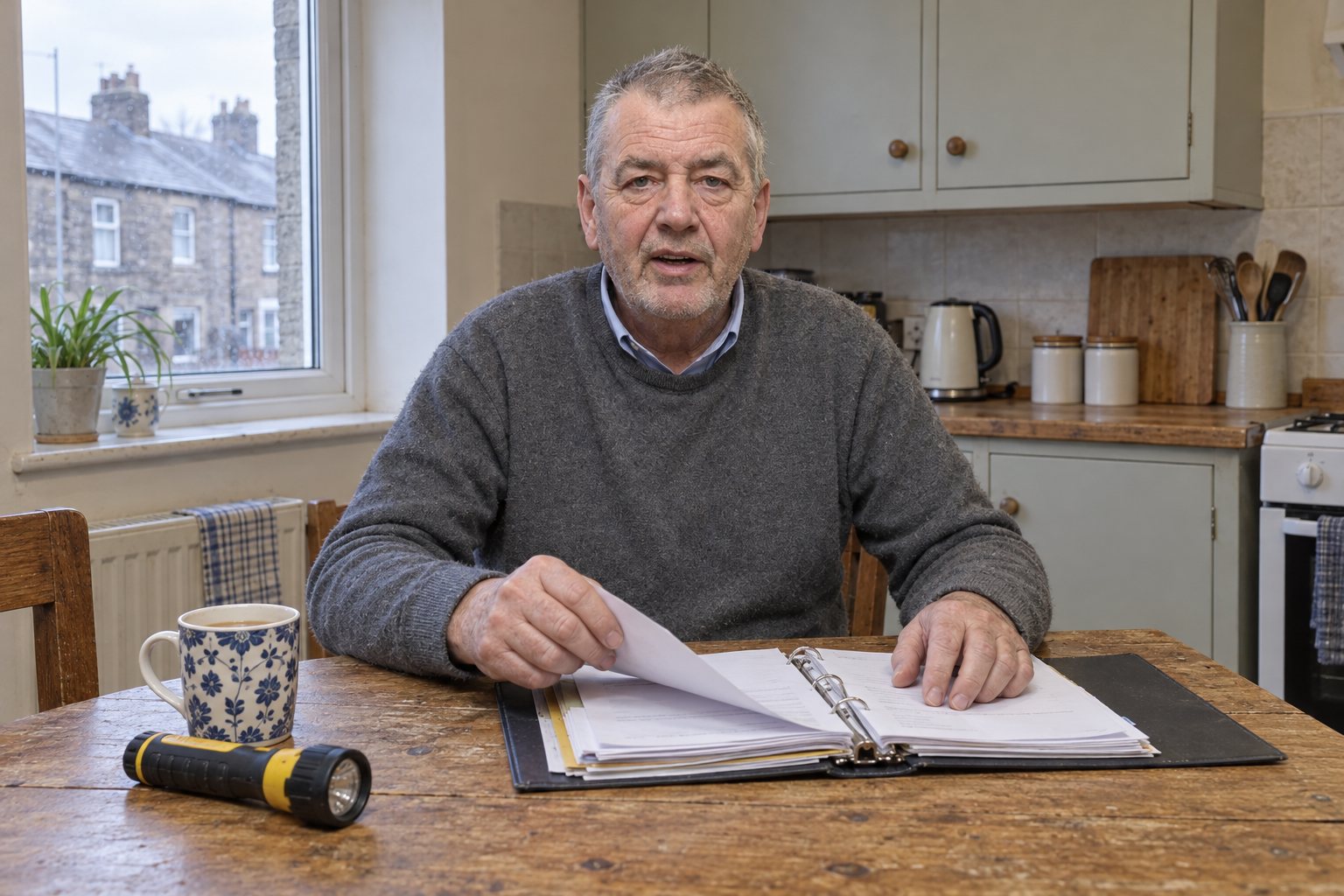
I wrote the plans for other people's emergencies. These are the ones I'd give my own street.
I was a baby in the Big Freeze of 1962. My mother used to tell me about the ice on the inside of the bedroom window, and the coins for the meter lined up on the mantelpiece.
I spent twenty-two years in the Royal Engineers, most of it in field logistics, power and water supply: getting light, water and a hot meal to people where the normal supply had stopped. Then fifteen years as an emergency planning officer for a county council, writing the plans for floods, blackouts and fuel shortages that most people never knew existed. I've stood in a school sports hall at two in the morning setting out camp beds for a rest centre. I know how thin the margin is between a normal Tuesday and a crisis, and how little most cupboards hold when the lights go out.
Since I retired to my stone terrace on the edge of a market town in the Midlands, the neighbours, old colleagues and friends from the village have kept asking me the same thing: what should I actually buy, and what should I actually do? The videos were my answer. These two books are the long answer, with the detail a video has no room for.
I'm not an electrician, a gas engineer or a doctor. I just wrote the plans, and saw where they broke.
Having a plan matters as much as having supplies. Most households have the tins. Very few have the plan.
Nobody hands you this at the door. So I've written it down. Graham
Questions people ask me.
I'm not much good with computers. Will I manage?
Yes. Press any yellow button and you pay through a secure checkout; I never see your card. The books open on the next screen and arrive in your email within a minute or two. Read them on a phone, tablet or computer, or print the pages you want. If you get stuck, reply to that email and it comes to me.
Is the type big enough?
Yes. A large-print edition of both books is included, and a Word version so you can make the print as big as you like.
Will it work in a flat or a small terrace?
It's written for one. There are chapters on gas canisters in a flat, prepping with no spare room, caravans, and water in a small home.
Is this American prepping with a British flag on it?
No. It's 105, the Priority Services Register, Met Office warnings, Pension Credit and the Warm Home Discount, combi boilers, terraced houses and British supermarket tins.
Money's tight. Is it worth it?
The thermostat chapter alone is worth about £90 a year to a typical home, by the Energy Saving Trust's figure. If the books don't save you more than they cost this winter, you get every penny back and keep them.
Can I buy it for my mum or dad?
Of course. Buy with your own email and forward them the download email, or print the fridge card and the 72-hour pages and take them round. Plenty of people do exactly that.
Do I have to buy lots of gear?
No. The first kit is about £50, in the right order. Most of the books are about what you do, not what you buy.
Is there a subscription?
No. One payment, the books are yours to keep, and updates are free.
What's The Power-Cut Kitchen?
The third book, if you want it: hot meals for every day of a power cut from ordinary tins on one camping ring, on half the gas, with the safe-cooking rules for a house, a flat and a caravan. You can add it here or at checkout.
What if it isn't for me?
Email me within 30 days for a full refund, and keep the books. No forms.